Read a model
A model that has been read appears under Models in the sidebar. Depositori read its tables, relationships and metrics: definitions, not rows. A model has four pages.
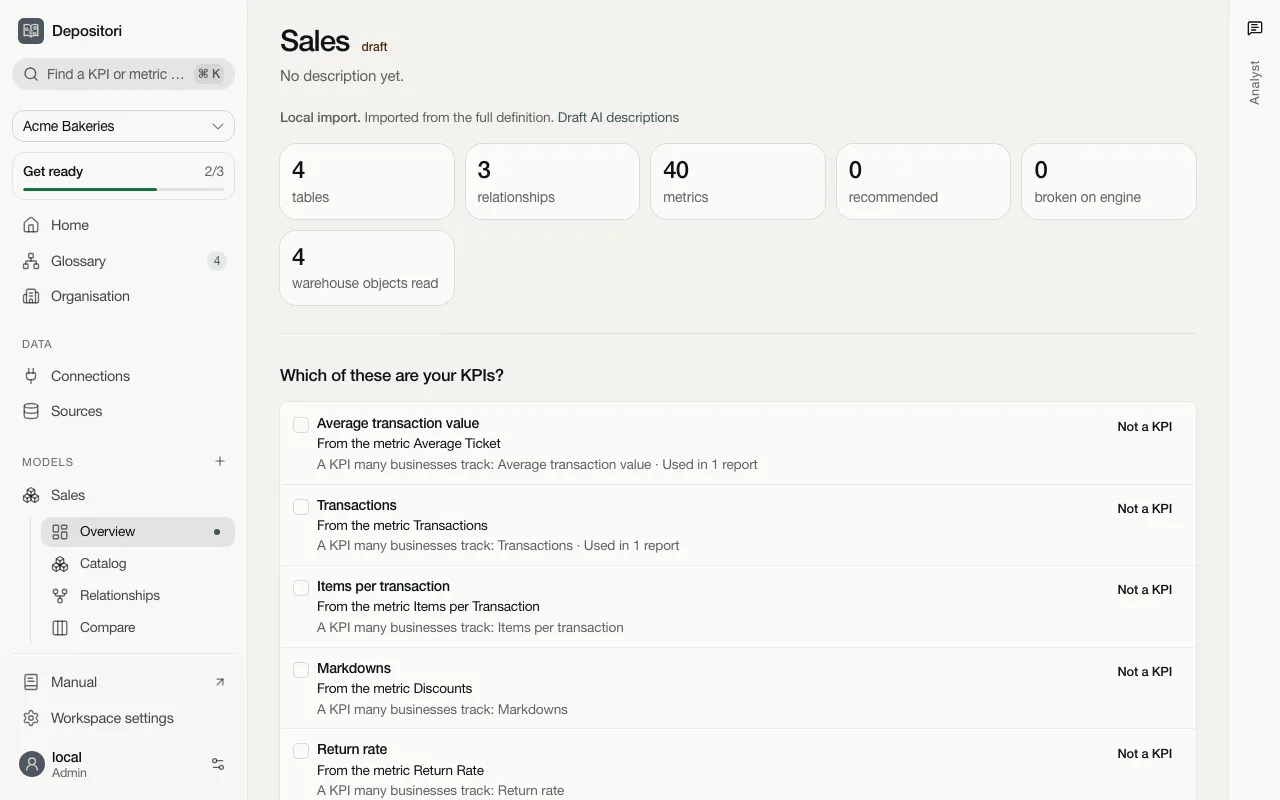
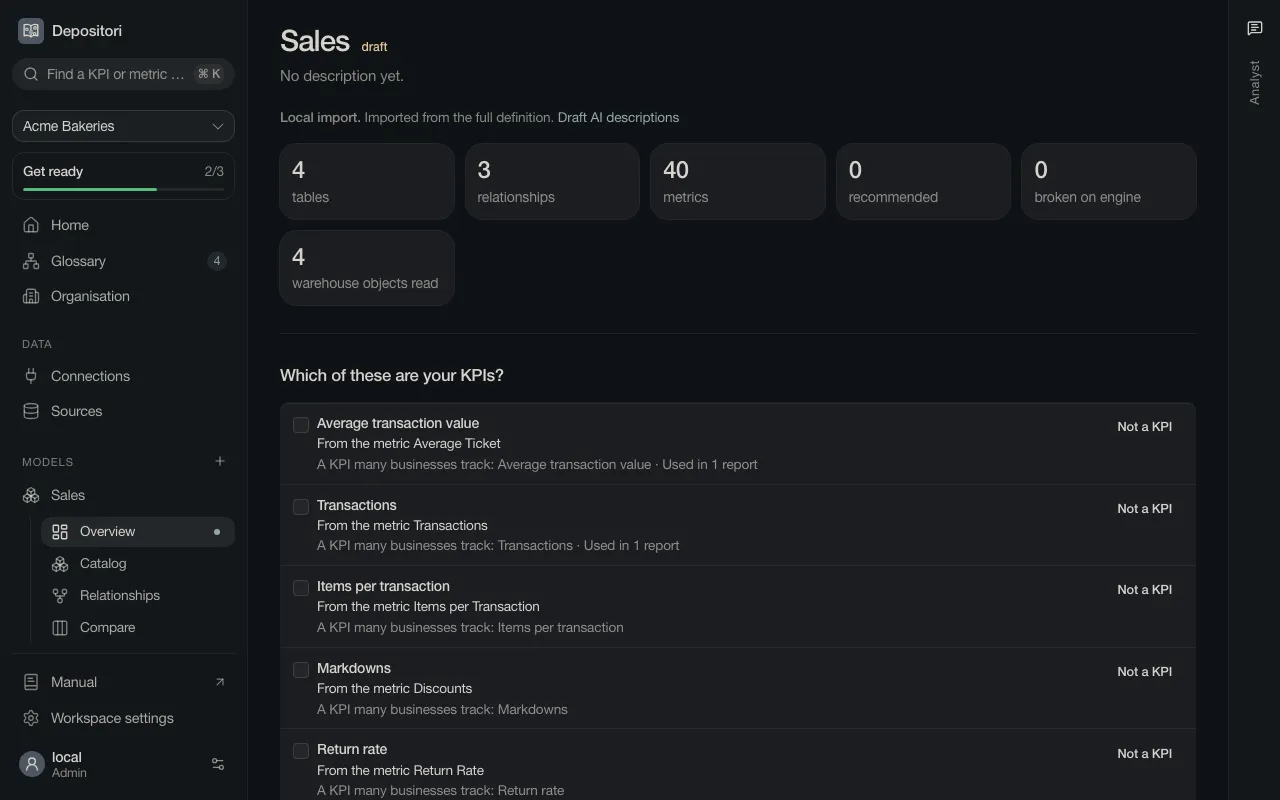
Overview shows what the model holds and which sources it reads.
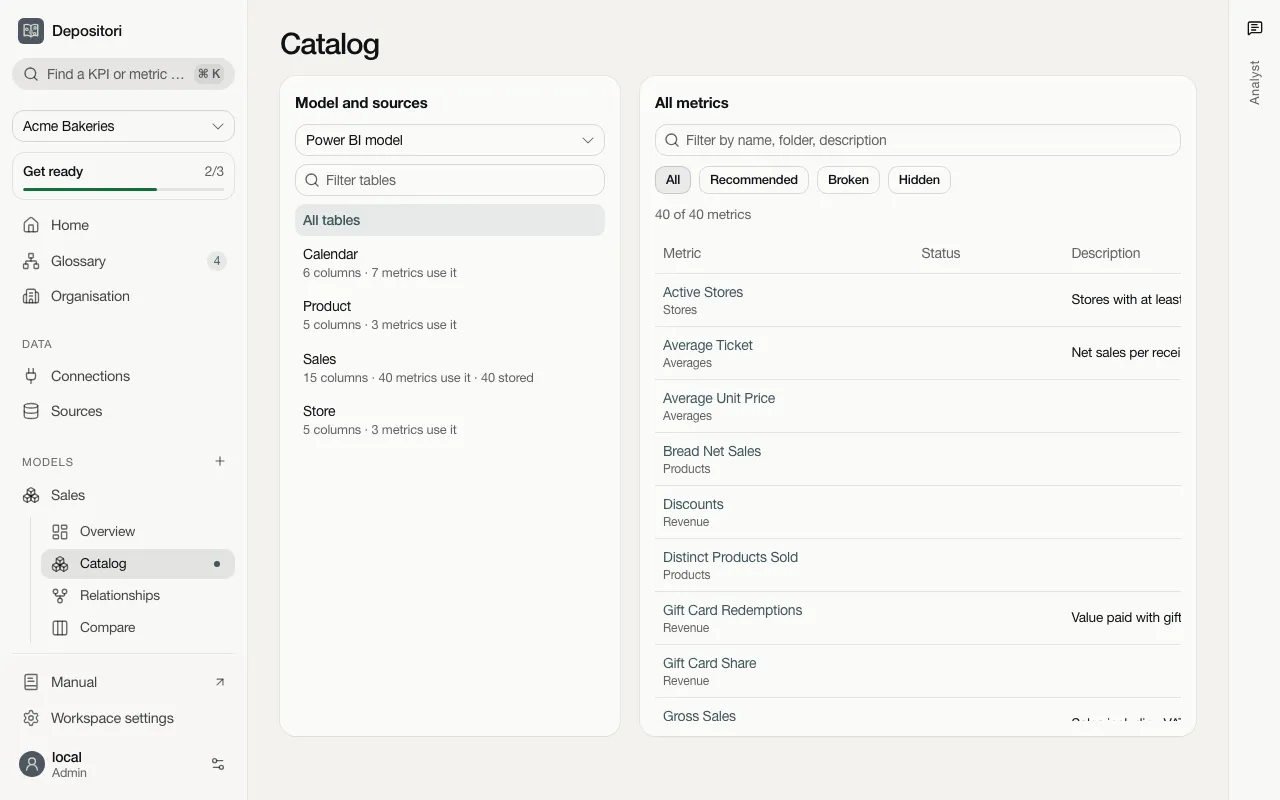
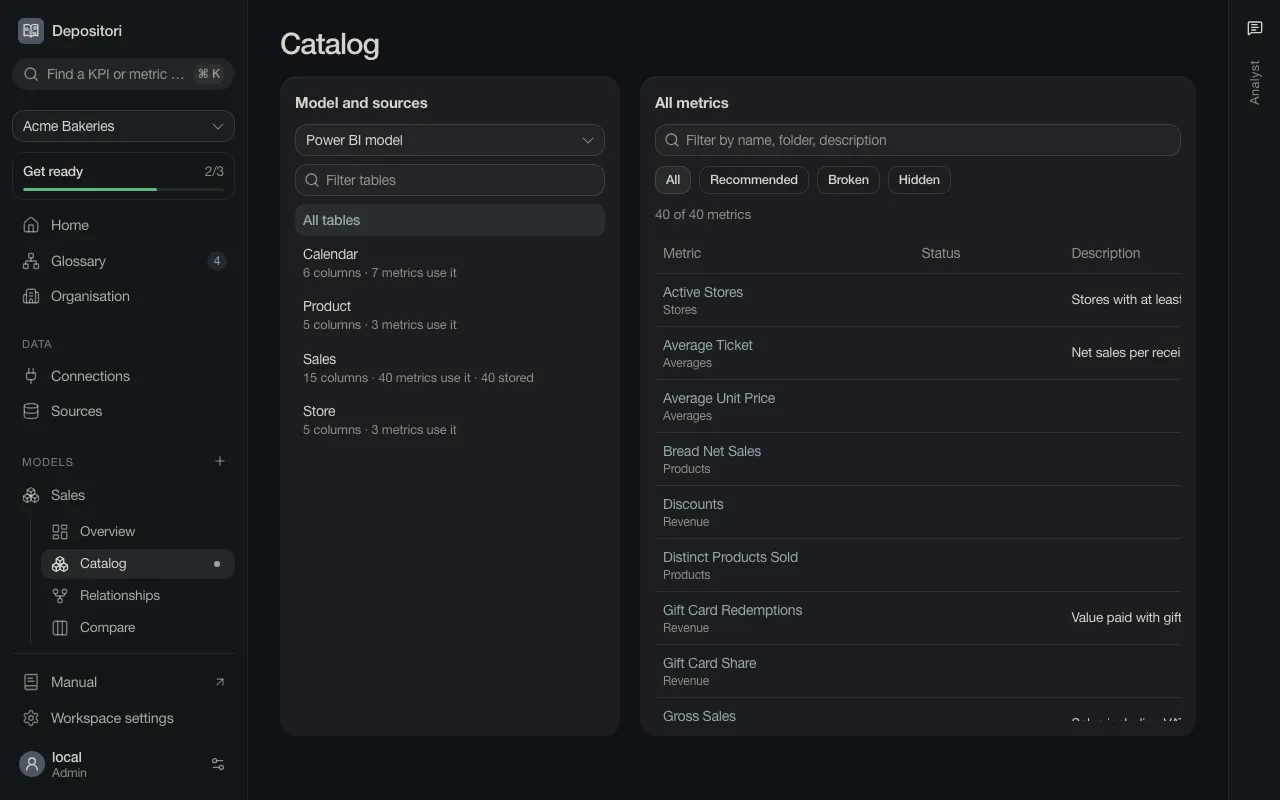
Catalog lists every table and metric. Type in the filter to find one.
Open a table to see its columns and their descriptions. A Contributor can write a description by hand there: see Describe tables and columns.
Open a metric to see its formula and its lineage: the columns and tables the number comes from.
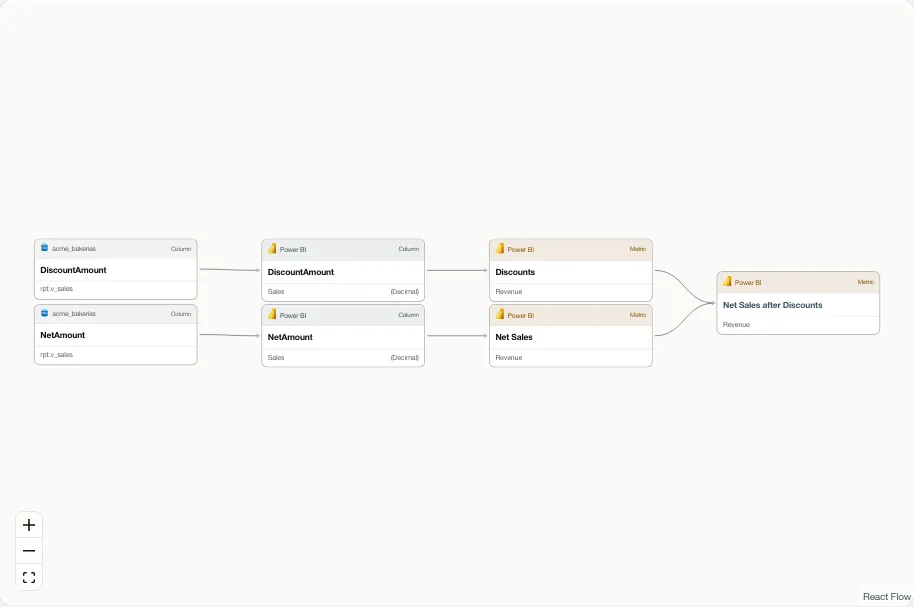
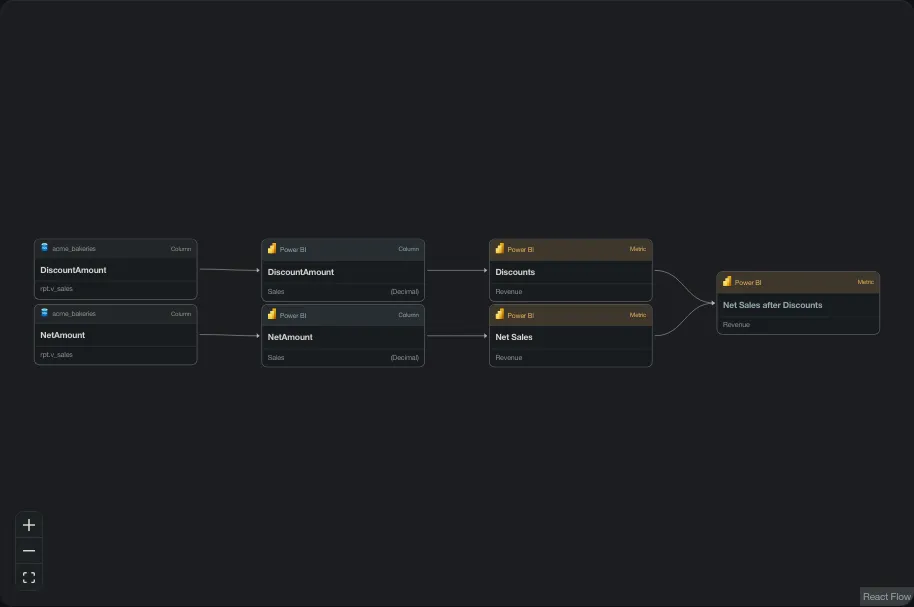
Relationships draws the tables and how they are linked. Its tabs Table Lineage and Column Lineage show where each table and column comes from.
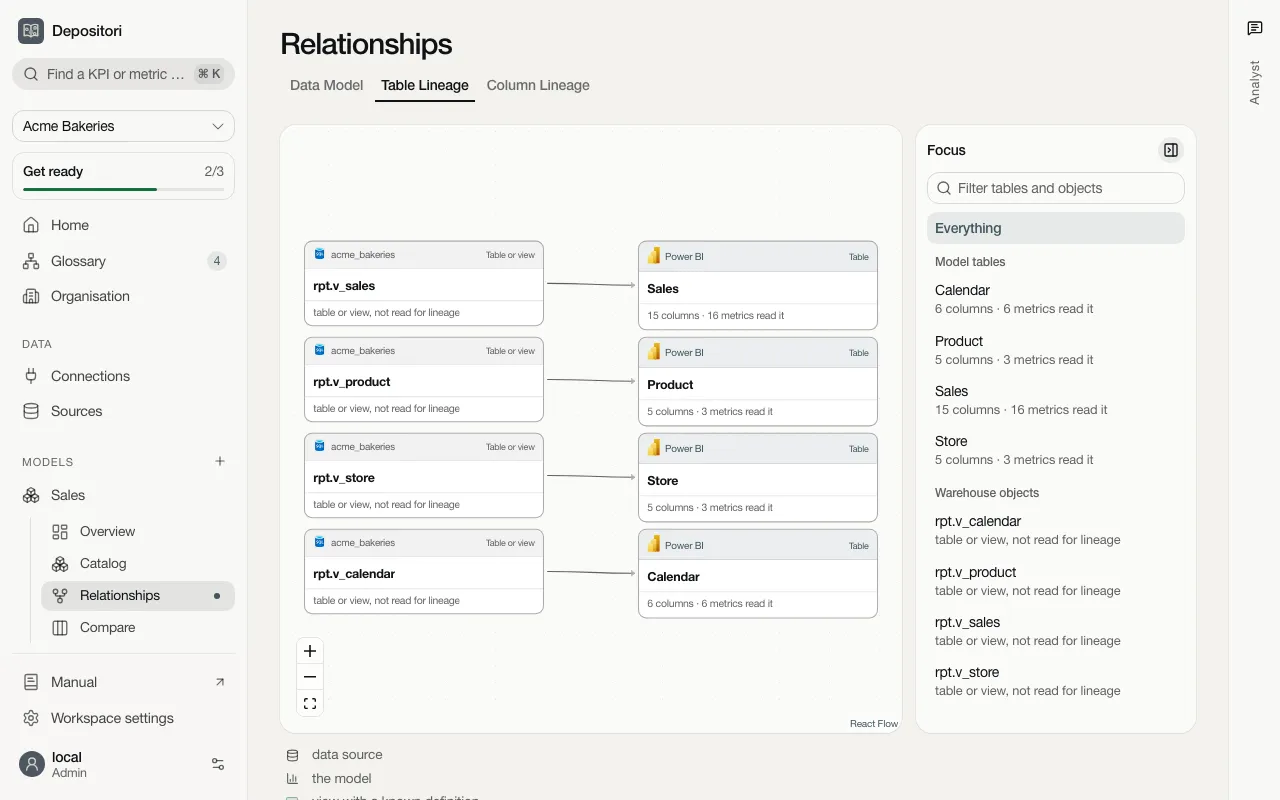
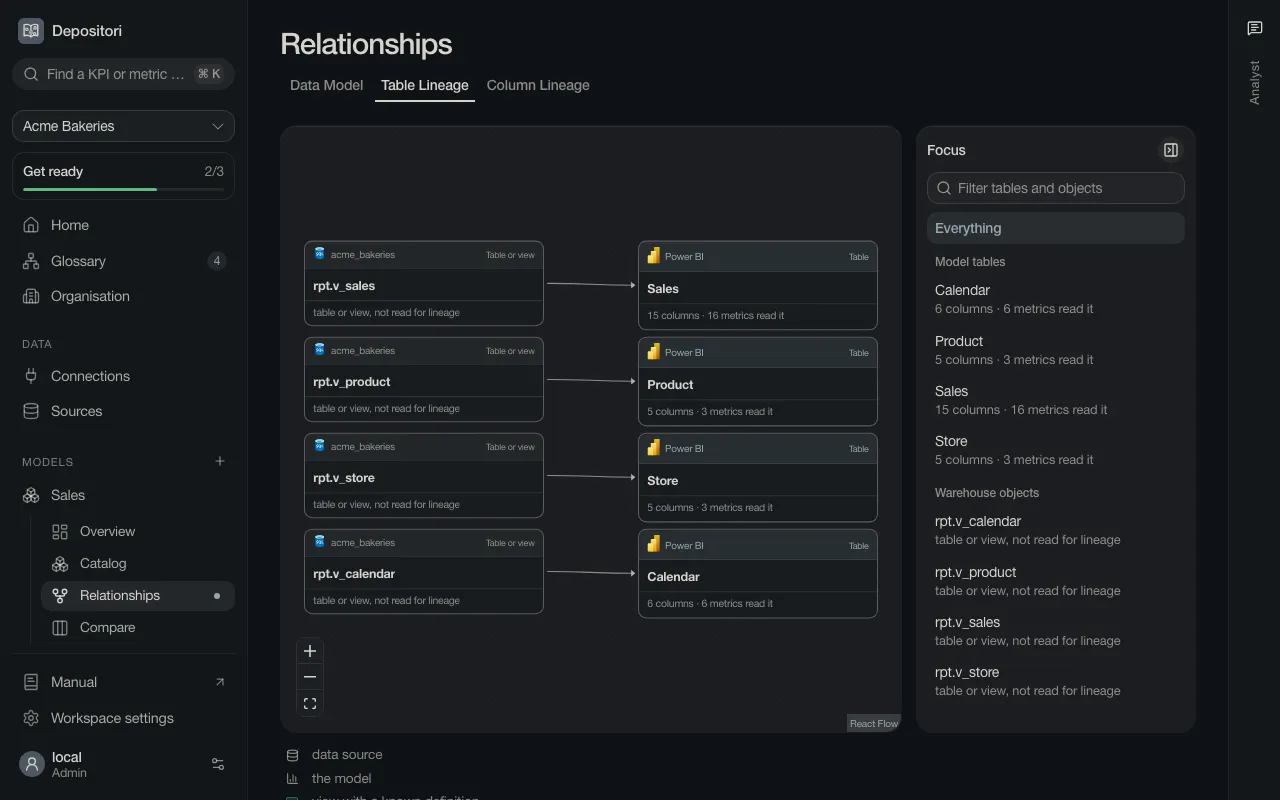
The lineage stops at the model’s own sources until the database behind them is read for lineage. Then it runs on through the database’s views, down to its base tables. A database the organisation has a shared connection to is named by that connection in the lineage, so one lake has one name in every model. See Azure SQL.
Compare lines the model up with other formats. Most readers don’t need it.
Who sees a model
Section titled “Who sees a model”A new model is shared with the organisation: everyone in it can read it. Choose Only you under Who sees the model when you add it to keep it to yourself; you can share it later. See Sharing.
Go on with Ask a question.